








| DeWitt Hospital and Nursing Home is a not-for-profit hospital located in DeWitt, Arkansas. DeWitt Hospital and Nursing Home is an Equal Opportunity Employer |

| Stroke Awareness Programs |
Telestroke - Stroke Assistance Through Virtual Emergency Support
Currently, many of Arkansas’ rural hospitals without the support of a neurologist often forgo
administration of tissue plasminogen activator (tPA), as they lack the staff resources to accurately
identify and manage tPA candidates. Further, the window of time needed to affectively administer
tPA is often lost when stroke patients are transported to a better-equipped, remote hospital. As such,
Arkansas’ stroke patients are missing out on a quality-of-life-saving drug that significantly improves
the chances of recovery while reducing permanent, stroke-related disability and, quite possibly,
mortality. Arkansas SAVES has implemented a stroke management system specifically targeting
these shortcomings by increasing access to subspecialty expertise through telemedicine technology,
thereby engineering a coordinated assessment and care-based plan for Arkansas’ stroke patients.
Arkansas Stroke Assistance through Virtual Emergency Support (Arkansas SAVES) has presented an
innovative solution to a complex, statewide problem. Not unlike those programs described above,
this initiative has relied upon the expertise of Arkansas’ neurologists, innovative telemedicine
systems, and ground-breaking medications to treat Arkansas’ stroke patients. DeWitt Hospital and
Nursing Home was selected to participate in the Arkansas SAVES pilot project. We have been
equipped with telemedicine technology, training for personnel, support for dedicated tele-stroke
coordinator, and ongoing continuing education. We are excited to have been chosen for this
program, and are working to educate the local community in stroke awareness.
For more information, please visit the AR Saves Homepage.
What is a stroke?
A stroke, sometimes called a "brain attack," occurs when blood flow to the brain is interrupted or if
bleeding occurs in or around the brain. When a stroke occurs, brain cells in the immediate area begin
to die because they stop getting the oxygen and nutrients they need to function.
What are the symptoms of a stroke?
What can you do to prevent a stroke?
There are several risk factors that increase your chances of having a stroke:
If you smoke, quit. If you have high blood pressure, heart disease, diabetes, or high cholesterol,
getting them under control - and keeping them under control - will greatly reduce your chances of
having a stroke.
What action should you take if you see someone experiencing the symptoms of a stroke?
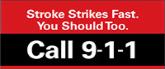
Call 9-1-1 immediately. Stroke is a medical emergency. In treating a stroke, every minute counts.
Knowing the symptoms of a stroke, making note of the time of the first stroke symptoms, and getting
yourself to the hospital quickly - within 60 minutes if possible - can help you save yourself, or
someone you know, from serious long-term disability. Be sure to bring any medications you are
currently taking with you to the hospital, and establish the exact time that symptoms began.
Currently, many of Arkansas’ rural hospitals without the support of a neurologist often forgo
administration of tissue plasminogen activator (tPA), as they lack the staff resources to accurately
identify and manage tPA candidates. Further, the window of time needed to affectively administer
tPA is often lost when stroke patients are transported to a better-equipped, remote hospital. As such,
Arkansas’ stroke patients are missing out on a quality-of-life-saving drug that significantly improves
the chances of recovery while reducing permanent, stroke-related disability and, quite possibly,
mortality. Arkansas SAVES has implemented a stroke management system specifically targeting
these shortcomings by increasing access to subspecialty expertise through telemedicine technology,
thereby engineering a coordinated assessment and care-based plan for Arkansas’ stroke patients.
Arkansas Stroke Assistance through Virtual Emergency Support (Arkansas SAVES) has presented an
innovative solution to a complex, statewide problem. Not unlike those programs described above,
this initiative has relied upon the expertise of Arkansas’ neurologists, innovative telemedicine
systems, and ground-breaking medications to treat Arkansas’ stroke patients. DeWitt Hospital and
Nursing Home was selected to participate in the Arkansas SAVES pilot project. We have been
equipped with telemedicine technology, training for personnel, support for dedicated tele-stroke
coordinator, and ongoing continuing education. We are excited to have been chosen for this
program, and are working to educate the local community in stroke awareness.
For more information, please visit the AR Saves Homepage.
What is a stroke?
A stroke, sometimes called a "brain attack," occurs when blood flow to the brain is interrupted or if
bleeding occurs in or around the brain. When a stroke occurs, brain cells in the immediate area begin
to die because they stop getting the oxygen and nutrients they need to function.
What are the symptoms of a stroke?
- Sudden numbness or weakness of the face, arm, or leg (especially on one side of the body)
- Sudden confusion, trouble speaking of understanding speech
- Sudden trouble seeing in one or both eyes
- Sudden trouble walking, dizziness, loss of balance or coordination
- Sudden severe headache with no known cause
What can you do to prevent a stroke?
There are several risk factors that increase your chances of having a stroke:
- Previous stroke
- High Blood Pressure
- Diabetes
- Smoking
- Heart Disease
- Family History of stroke
- High Cholesterol
- Lack of physical activity
If you smoke, quit. If you have high blood pressure, heart disease, diabetes, or high cholesterol,
getting them under control - and keeping them under control - will greatly reduce your chances of
having a stroke.
What action should you take if you see someone experiencing the symptoms of a stroke?
Call 9-1-1 immediately. Stroke is a medical emergency. In treating a stroke, every minute counts.
Knowing the symptoms of a stroke, making note of the time of the first stroke symptoms, and getting
yourself to the hospital quickly - within 60 minutes if possible - can help you save yourself, or
someone you know, from serious long-term disability. Be sure to bring any medications you are
currently taking with you to the hospital, and establish the exact time that symptoms began.